
Reviewed · CHOCOLATE AND COFFEE TOURS
Zona Colonial: Recorrido Histórico con Chocolate y Mamajuana
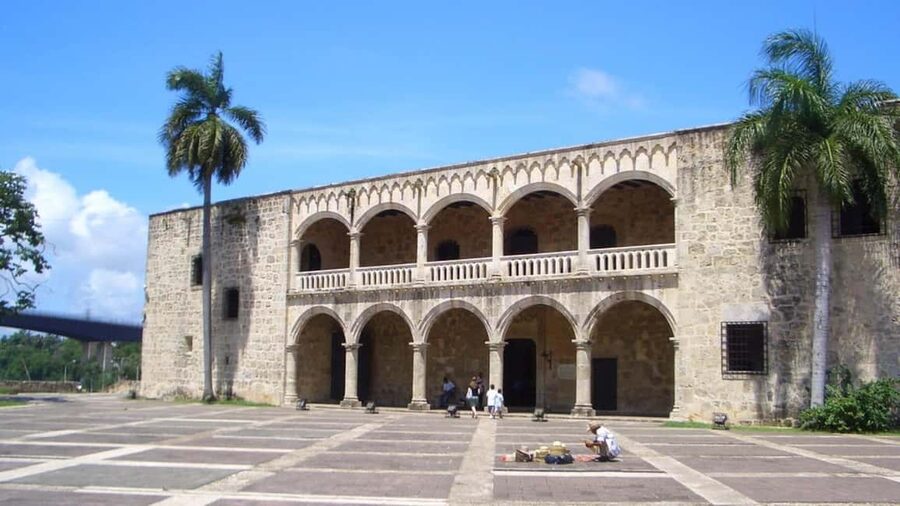
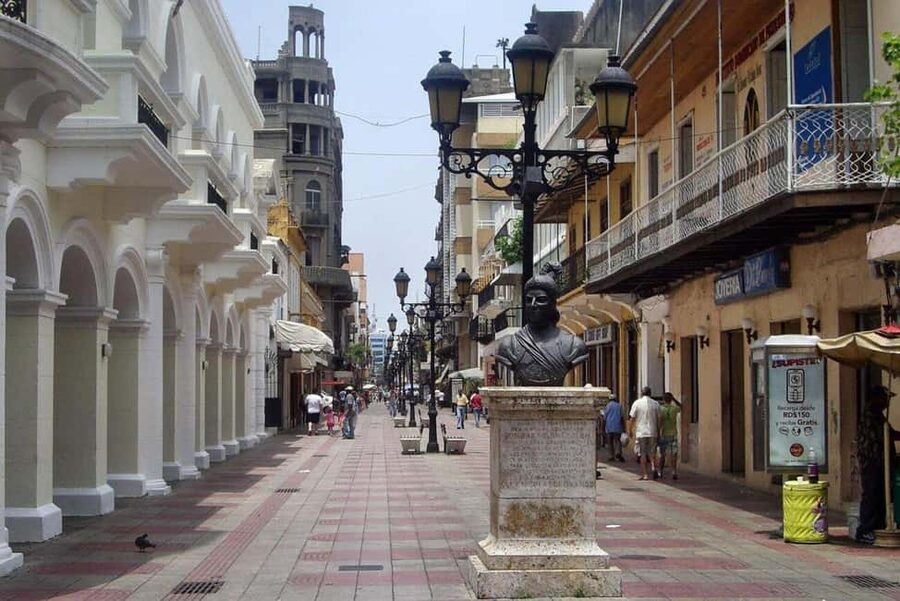
Santo Domingo’s Colonial Zone packs centuries of Spanish rule, Dominican independence, faith, trade, and daily city life into a walk of about two hours. For $5 per person, you move from the Sundial and Museum of the Royal Houses to Plaza España, Alcázar de Colón, Calle El Conde, Parque Colón, and the Primate Cathedral of the Americas.
I like the low price and the strong mix of famous sights with ordinary city streets. I also like the choice of a live guide in English, French, or Spanish, with Fernando singled out by name for making the walk especially enjoyable.
The main catch is that chocolate and mamajuana do not appear in the actual route details. Museum tickets cost extra, and one recorded visit lasted about 1 hour 15 minutes rather than the full two hours, so you should not book this expecting a food tasting or a long political history lesson.
Key points to know before booking
- Start at the Sundial: Meet at the Reloj del Sol in front of the Museum of the Royal Houses, near the listed coordinates.
- See the Colonial Zone’s headline sights: The route includes Alcázar de Colón, Fortaleza Ozama, Plaza España, Parque Colón, and the Primate Cathedral.
- Expect a fast historical walk: Several stops last only 15 minutes, so the guide gives an overview rather than a long museum visit.
- Plan for extra museum costs: Tickets are not included in the $5 price.
- The title needs a reality check: No chocolate or mamajuana activity is described in the route.
- Wear practical shoes: Cobblestones, heat, sunscreen, and water are all part of the day’s planning.
Why this $5 walk can be useful
The Colonial Zone is compact, but it is not simple. A few blocks hold grand stone buildings, churches, military defenses, museums, plazas, shops, restaurants, and streets where local life continues around the monuments. A guide helps connect those pieces instead of leaving you to see them as unrelated photo stops.
At $5, this is an unusually inexpensive way to get your bearings. You are paying for a guided introduction, not a private tour or a full museum program. That distinction matters. The route covers many places, but the short stops mean you should expect clear explanations and outside views more than lengthy time inside every building.
The route also gives you a useful mix of subjects. The Museum of the Royal Houses and Alcázar de Colón focus on colonial power. Fortaleza Ozama brings in defense and military control. The cathedral adds religion, while Calle El Conde and Parque Colón show how the district functions as part of modern Santo Domingo.
The activity has a 4.8 rating from 76 bookings, and Fernando receives specific praise as a guide. I would still treat the experience as a brisk orientation walk. The information provided does not promise a small group, hotel pickup, food tasting, or extended time at any single attraction.
More Santo Domingo City Tours:
- Santo Domingo: Los Tres Ojos, Boca Chica & More
★ 4.8 · 219 reviews - Colonial Zone: Historical Tour with a visit to the Columbus Lighthouse and Tres Ojos Park
★ 4.9 · 157 reviews - Santo Domingo: Colonial Zone Bike Tour
★ 5.0 · 127 reviews
Finding the Sundial and starting point
The meeting point is the Reloj del Sol, or Sundial, in front of the Museum of the Royal Houses. The listed coordinates are 18.47559621681003, -69.88294794166414. The starting-location field also names the Chapel of Our Lady of Remedies, so use the exact map pin and look for the guide at the Sundial rather than relying only on the chapel name.
This is a practical detail worth taking seriously. The Colonial Zone has several plazas, churches, and historic corners within a short walk of each other. Arrive with enough time to identify the Sundial and the museum entrance. Your guide is expected to wait there, not at a hotel or transportation terminal.
The walk begins in one of the district’s most atmospheric areas. The old streets and stone buildings give the guide an easy setting for stories about early Spanish rule, colonial officials, religious life, and the city’s changing role. The supplied description refers to ancient legends connected with the Sundial, so this first stop sets a storytelling tone rather than functioning as a formal museum visit.
Museum of the Royal Houses and Plaza España
The Museum of the Royal Houses is one of the main stops, with about 15 minutes listed for a guided visit. Its displays and rooms deal with the colonial era, and the building itself helps explain how Spanish administration worked in the Americas.
Fifteen minutes is enough for an introduction, but not enough for a careful museum visit. If you enjoy reading every panel or studying objects at length, you will want to return on your own. Museum tickets are not included, so confirm the admission cost before entering and carry room in your schedule if you plan to explore beyond the group visit.
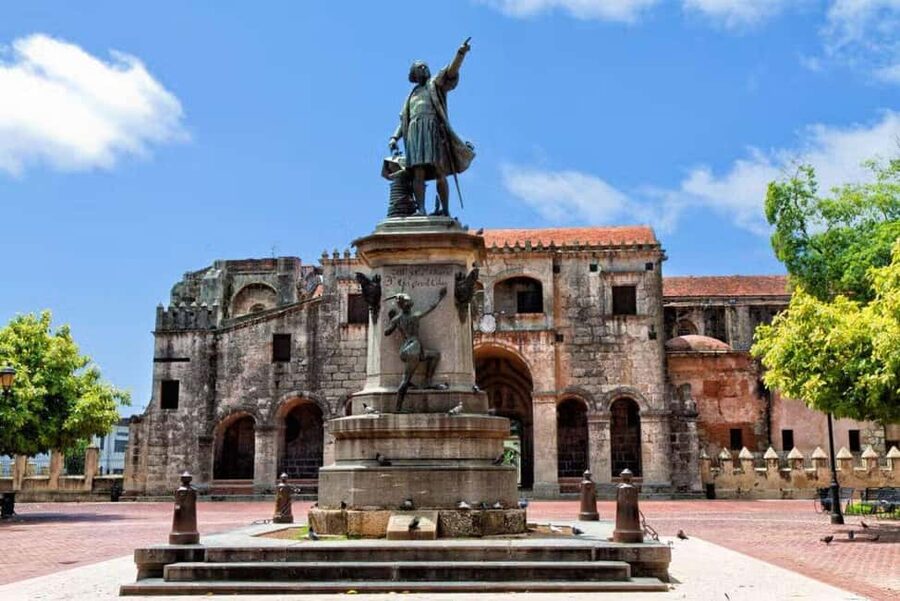
From there, the route continues toward Plaza España. This broad historic square is known for its Spanish colonial architecture and its statue of Christopher Columbus. It also provides a useful visual pause after the museum’s interior spaces. You can look across the square, study the surrounding facades, and see how the old quarter frames its public spaces.
The plaza is also where the tour’s colonial story can feel grandest. The buildings suggest authority and wealth, while the guide’s explanation can help put those details into context. Keep your expectations measured, though. The stated time is short, and the route has many stops still ahead.
Alcázar de Colón and the colonial seat of power
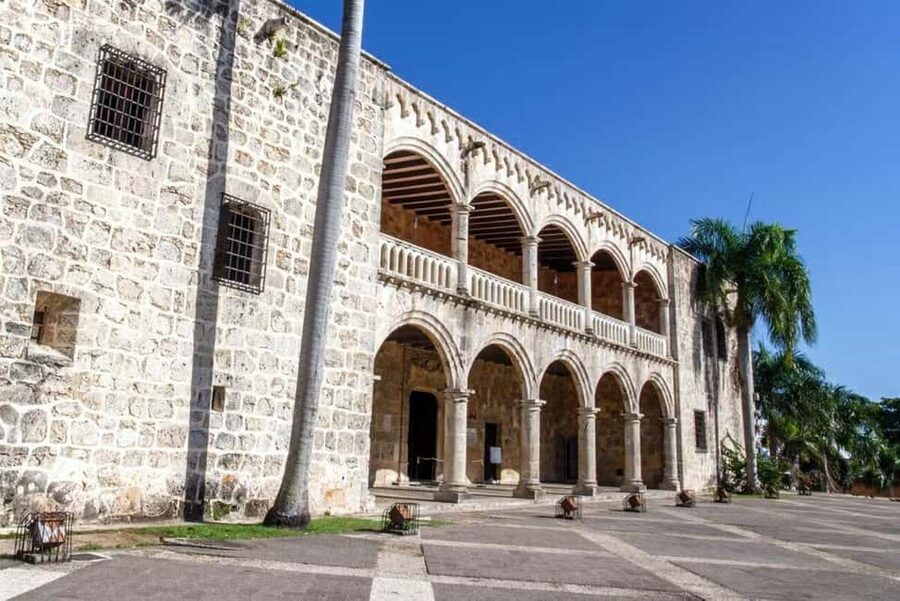
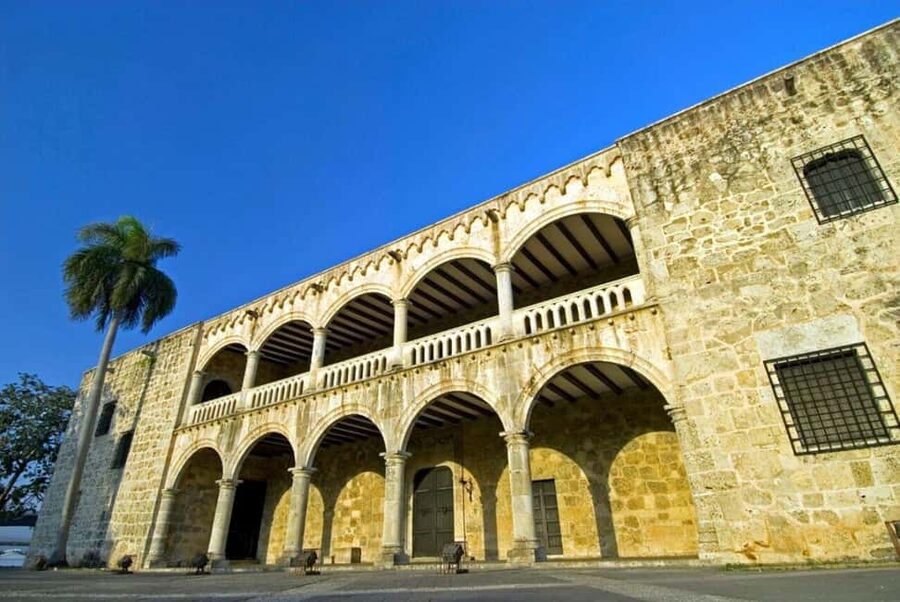
The Alcázar de Colón receives another 15-minute visit. This imposing residence is presented as the home of the first governors of the Americas, and its halls and courtyards are meant to show the scale and comfort of colonial leadership.
For many people, this will be the visual high point of the tour. The building offers a clear contrast with the narrower streets and smaller structures nearby. You get a sense of how colonial power was displayed through architecture, space, and position.
The short time allocation is again the key limitation. You will likely receive a focused explanation and a quick look at the main areas rather than a slow examination of every room. If the Alcázar is your main reason for booking, check whether the admission ticket is separate and consider returning later for a fuller visit.
I also recommend listening for what the guide explains about people who lived and died in these buildings. That kind of personal detail can make the architecture easier to understand. At the same time, the route may give less attention to major political questions, including the relationship between the Dominican Republic and Haiti or the precise process that led to Dominican independence. If those subjects matter most to you, ask direct questions during the walk.
More Chocolate and Coffee Tours in Santo Domingo:
- Santo Domingo: Chocolate Tour + Optional Workshops
★ 4.5 · 60 reviews - Santo Domingo Small Group Walking Tour: Beer and Specialty Coffee
★ 5.0 · 55 reviews - Dominican Republic: 3-Hour Chocolate Lovers Tour
★ 4.9 · 4 reviews - 4×4 Dominican Adventure with Chocolate and Coffee Tasting
★ 5.0 · 2,920 reviews
Fortaleza Ozama and the military side of the city
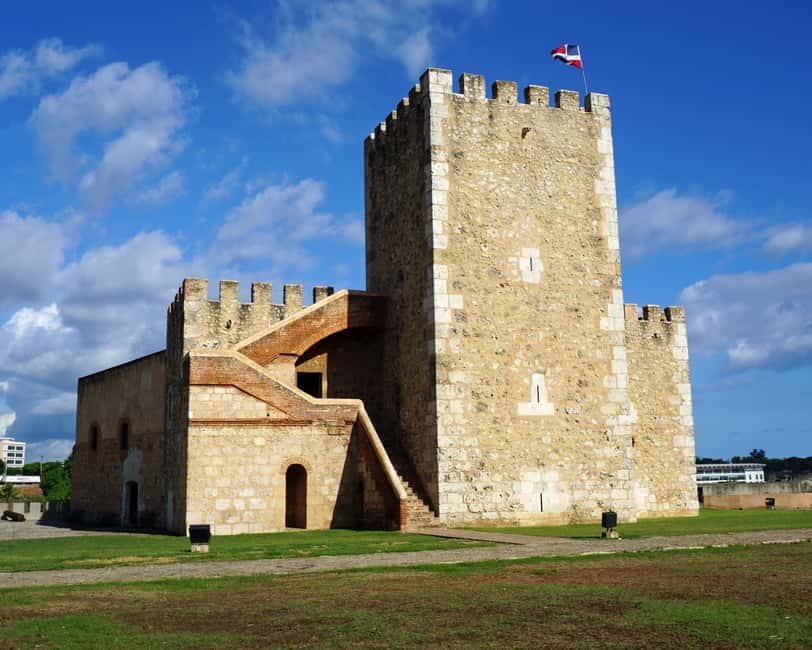
Fortaleza Ozama receives about 15 minutes of guided attention. The fortress brings a different subject into the tour: defense. Its presence helps show that the Colonial Zone was not only a place of government, religion, and grand residences. It was also a controlled port city that needed protection.
This stop is useful because it broadens the story beyond famous governors and church leaders. The fortification helps explain the strategic importance of Santo Domingo and gives the guide a natural opening to discuss the city’s role in the early colonial period.
Again, this is a brief visit. The itinerary does not promise a long climb, a complete fortress tour, or extended time for photographs. If the guide is moving quickly, stay close and listen for the main points before taking pictures.
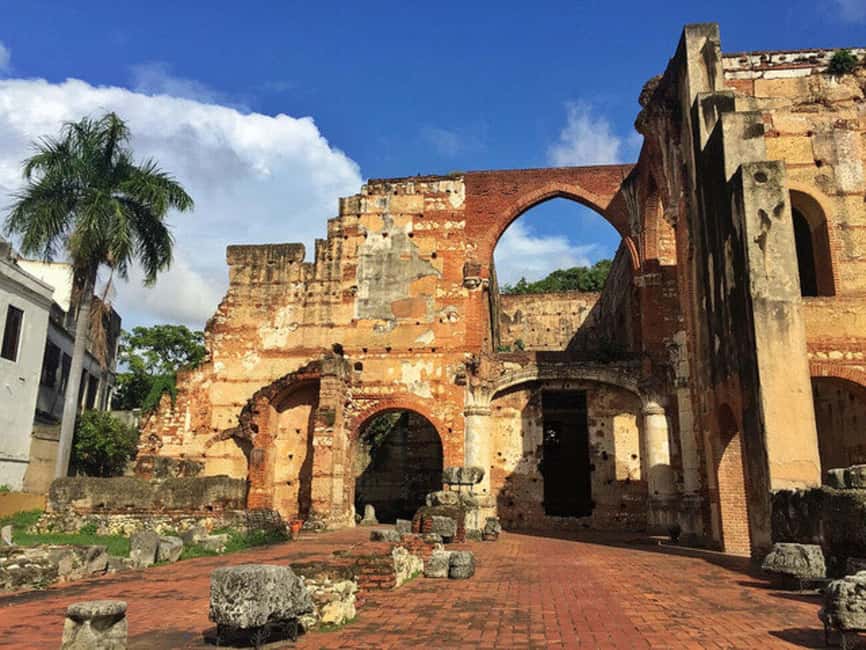
The route also includes the Juan Pablo Duarte Wax Museum and Nicolás de Bari Hospital. These stops add Dominican national identity and medical history to the colonial setting. The Wax Museum presents important moments from the fight for independence and major cultural milestones through wax figures. The hospital offers a look at how care and medicine developed on the island over the centuries.
These are unusual additions to a basic colonial walk. They help move the tour beyond buildings and dates. The tradeoff is time. With so many attractions included, each visit will be introductory.
Calle El Conde, Parque Colón, and everyday Santo Domingo
Calle El Conde is one of the most useful parts of the route for getting a feel for present-day city life. This old pedestrian street has shops, restaurants, and street performers, and the tour allows about 10 minutes for a guided walk.
Ten minutes is enough to see the street’s character and note places you may want to revisit. It is not enough for serious shopping or a meal. I would treat this stop as a bridge between the formal monuments and the living city around them.
The street also gives you a break from the museum rhythm. You can see storefronts, hear street activity, and watch people use the Colonial Zone as part of their daily routine. That contrast makes the earlier colonial buildings easier to place in the modern city.
Parque Colón follows with about 15 minutes. The park is centered on a statue of Christopher Columbus and offers a place to pause among the surrounding buildings. It is a good location for photographs and for reviewing the route before the final cathedral visit.
The name of the park and the statue also invite questions about how colonial symbols are viewed today. The supplied tour details do not promise a long discussion of that issue, so ask the guide if you want more context. A good guide can help you connect the monument with the broader story of the Americas without turning the stop into a simple photo opportunity.
The Primate Cathedral of the Americas
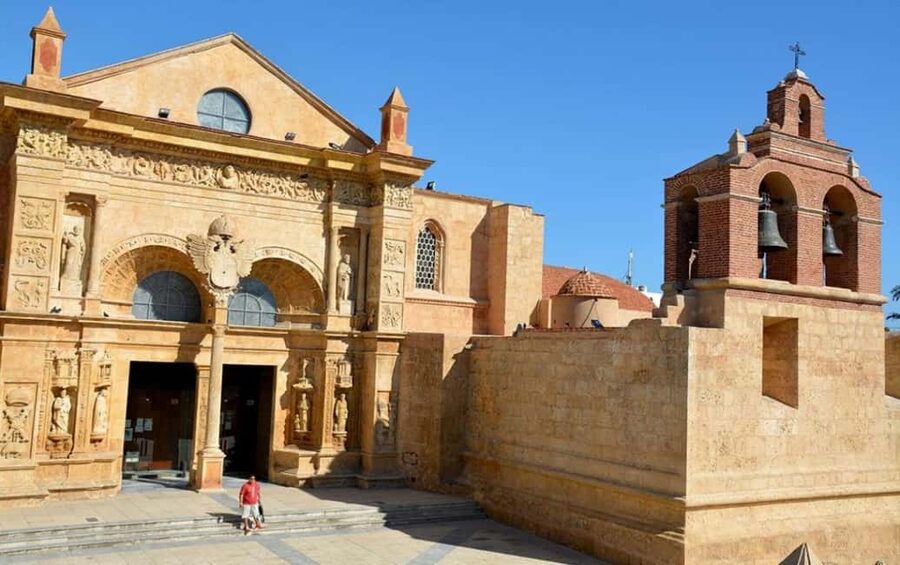
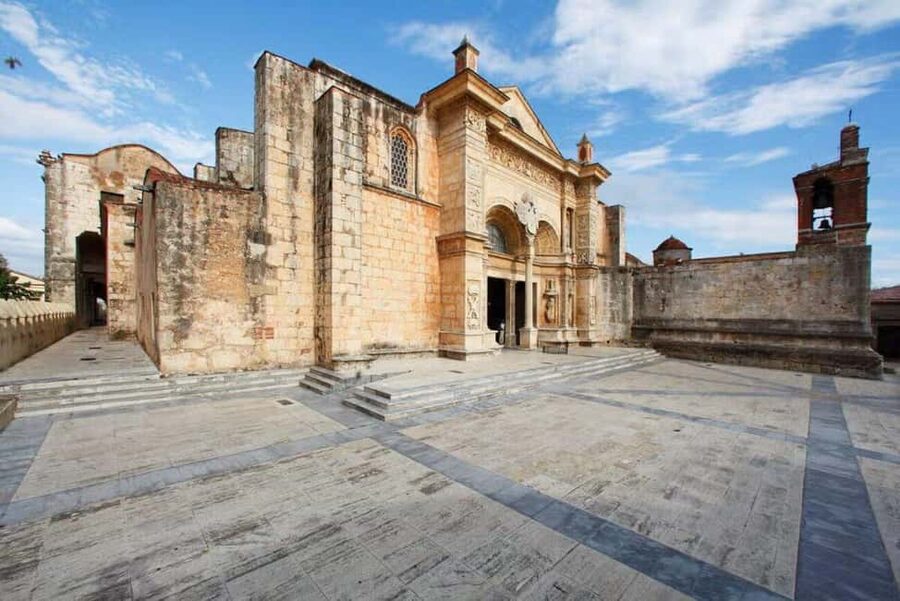
The Primate Cathedral of the Americas receives the longest single scheduled visit, about 20 minutes. Its architecture and religious importance make it a fitting final major stop.
The cathedral has witnessed centuries of faith and devotion on the island. Inside, look for architectural details and listen for the guide’s explanation of its place in regional religious history. The longer time allocation suggests that you will have a little more space here than at some of the earlier stops, though this is still a guided overview rather than a full study visit.
The cathedral also brings together several themes from the walk. Colonial government, military power, commerce, public monuments, and religion all meet within a small part of Santo Domingo. Ending here gives the route a clear sense of place, even if the tour does not explore every period of Dominican political history in equal detail.
Be respectful of the setting and follow any rules in effect during your visit. The activity details do not specify photography rules, so ask your guide before taking pictures inside.
Timing, pace, and what the two hours really mean
The official duration is two hours, with availability depending on the starting time you select. The itinerary lists roughly 15 minutes at several stops, 10 minutes on Calle El Conde, 20 minutes at the cathedral, and about 30 minutes for the broader Colonial Zone portion. That is a lot of ground for a short walk.
One recorded completion lasted about 1 hour 15 minutes. I would therefore keep your schedule flexible, especially if you are arranging a meal, museum entry, airport transfer, or another timed activity immediately afterward. The actual pace may depend on the guide, group movement, access to buildings, and how much time is spent answering questions.
Comfortable shoes matter. The route includes historic streets and cobblestones, and you will be on your feet for most of the activity. Bring water, sunscreen, and a camera. The information provided does not identify an air-conditioned vehicle or any transportation between stops, so plan for this as a walking tour.
The activity is not suitable for wheelchair users. No group-size information is provided, so do not assume a private or small-group format.
The chocolate and mamajuana question
The title includes chocolate and mamajuana, but the detailed route does not describe a tasting, demonstration, stop at a chocolate shop, or sample of mamajuana. The included items list historic sights only.
This is the clearest point to settle before booking. If you want a Colonial Zone orientation for $5, the title issue may not matter. If you specifically want Dominican drinks or chocolate, choose a tour that clearly lists those activities or contact the provider before paying.
The absence of a tasting does not reduce the value of the historic route itself, but it does change what you should expect. Go for the buildings, public squares, museums, and guide commentary, not for food and drink.
Who will get the most from this tour
I would recommend this walk to a first-time visitor who wants a quick introduction to Santo Domingo’s oldest district. It also suits anyone working with a tight budget, since the basic price is only $5 and the route covers several major sights.
It is a good fit if you like moving between different subjects rather than spending two hours in one museum. You get colonial administration, military history, religion, national identity, medicine, public monuments, shopping streets, and modern city life in one compact outing.
I would be more cautious if you want a detailed account of Dominican independence, relations with Haiti, or modern political history. One direct assessment of the tour found too much attention on buildings and their former occupants, with too little explanation of those wider political subjects. Ask questions as you go, but do not assume the standard route will provide a full national history course.
It may also disappoint you if you want slow museum time, a food tasting, or a guaranteed two-hour program. The price is excellent for an introduction, but the breadth of the route comes at the cost of depth.
Should you book the Colonial Zone walk?
Book it if you want an inexpensive, guided orientation to Santo Domingo’s historic center. The route hits the major names, Fernando has been singled out for warm praise, and the mix of museums, plazas, fortifications, streets, and cathedral gives you plenty of useful context for later exploring.
Skip it if chocolate and mamajuana are your main goals, or if you need wheelchair access. Also skip it if you prefer one substantial museum visit to a quick sequence of stops.
For most budget-conscious visitors, the value is strong. Just meet at the Sundial in front of the Museum of the Royal Houses, budget extra for museum tickets, wear good walking shoes, and treat the two-hour figure as an estimate rather than a promise.
FAQ
How much does the tour cost?
The tour costs $5 per person.
How long does the tour last?
The advertised duration is two hours, but one recorded visit lasted about 1 hour 15 minutes. Keep some flexibility in your schedule.
Where is the meeting point?
Meet at the Reloj del Sol, or Sundial, in front of the Museum of the Royal Houses. The listed coordinates are 18.47559621681003, -69.88294794166414.
Which languages are available?
The live guide is available in English, French, and Spanish.
Are museum tickets included?
No. Museum tickets are not included in the tour price.
Does the tour include chocolate and mamajuana?
The detailed route does not list chocolate or mamajuana tastings or activities. Confirm with the provider before booking if those are important to you.
What should I bring?
Bring comfortable shoes, a camera, sunscreen, and water.
Is the tour suitable for wheelchair users?
No. The activity is listed as not suitable for wheelchair users.
More Rum and Cigar Tastings in Santo Domingo
- Santo Domingo: Tres Ojos, Faro a Colón & Mamajuana Tour
★ 5.0 · 3 reviews - 101 Oliver Rum Tasting & Pairing And Taino Concept Store
★ 5.0 · 244 reviews - Punta Cana Buggy with Cave Dip, Mamajuana Tasting & Macao Beach
★ 4.5 · 233 reviews - Punta Cana Oliver & Oliver Rum Tasting & Taino Concept Store
★ 4.6 · 146 reviews
Newest Santo Domingo trips we have written up
- Santo Domingo: Tres Ojos, Faro a Colón & Mamajuana Tour★ 5.0 · 3 reviews
- Santo Domingo: Small Group Tour with Cable Car from Bayahibe★ 3.9 · 5 reviews
- Santo Domingo Tour with caves from Punta Cana★ 4.0 · 5 reviews
- Punta Cana: Saona Island VIP | Private Beach, Open Bar & Lunch★ 3.4 · 6 reviews
- Santo Domingo: Saona Island Cataraman Food And Drink★ 4.7 · 4 reviews
- Santo Domingo: Paradisiac Waterfall & Lunch Cooked Over Wood★ 5.0 · 3 reviews
- Santo Domingo: Private City Tour walking★ 4.1 · 3 reviews
- Santo Domingo: Guided City Tour with Lunch★ 4.9 · 3 reviews
Chocolate and Coffee Tours, compared.

4×4 Dominican Adventure with Chocolate and Coffee Tasting
Read our review →
4×4 ATV Experience, Water Cave, Chocolate and Coffee Tasting
Read our review →
Buggy Adventure Tour with Chocolate and Coffee in Punta Cana
Read our review →
Buggy Ride Into the jungle with cave coffee & chocolate tasting
Read our review →
Road Off Half Day Buggy with Chocolate and Coffee Tasting
Read our review →
ATV Adventure w/ Chocolate, Coffee & Cave Swim in Punta Cana
Read our review →
Buggy Adventure to Water Cave and Macoa Beach with Coffee Taste
Read our review →
Puerto Plata Private City Tour with Mount Isabel & Rum &Chocolate
Read our review →Browse the lists this tour appears in