
Reviewed · SANTO DOMINGO TOURS
Santo Domingo: The Authentic Dominican Neighborhood Tour
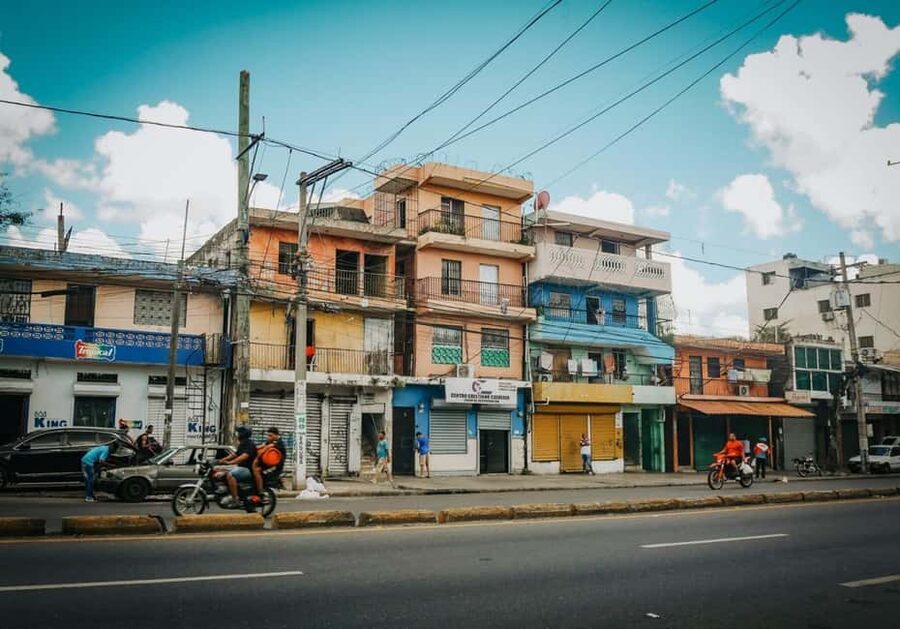
Santo Domingo’s Colonial Zone tells one important part of the city’s story. This tour takes you five minutes away and into ordinary neighborhood life, where you can browse a local market, meet residents, taste homemade treats, and ride public transport used by city residents. The cable car gives you a fine view from above, while the walking route puts you at street level.
I like the tour’s easy access from the tourist center and its mix of small food stops, local conversation, and public transport. I also like that guides such as Juan, Joel, Mike, and Maiky focus on their own community and explain daily life with warmth and pride. The main consideration is that this is a real neighborhood walk, not a polished attraction, and it is not suitable for wheelchair users.
Key points to know before you book
- Eduardo Brito is the starting point: Meet the guide at the metro station, only about five minutes from the main tourist areas.
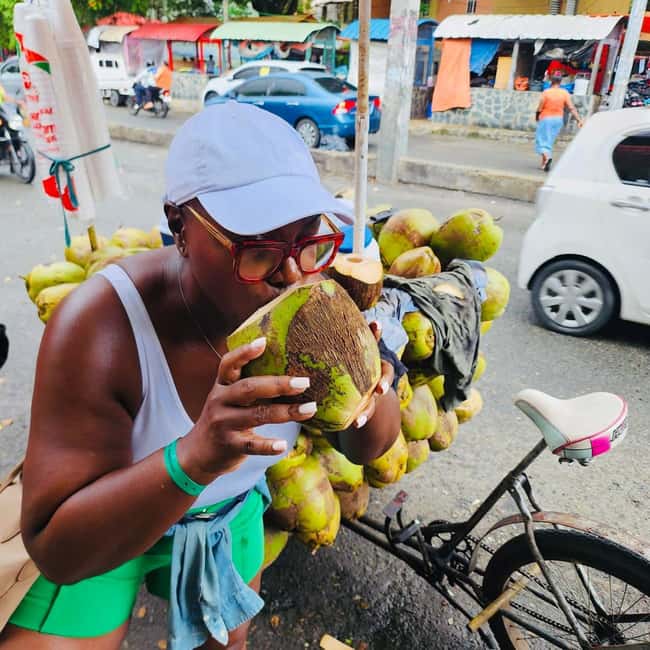
- The food is part of the lesson: Expect Dominican coffee, fundita ice cream, and either empanadas or an afternoon chimi.
- You see the city at street level: The route includes a market, local shops, a typical Dominican home, and friendly conversations with residents.
- The cable car is more than a ride: It offers broad views from the National District toward northern Santo Domingo while your guide explains the area.
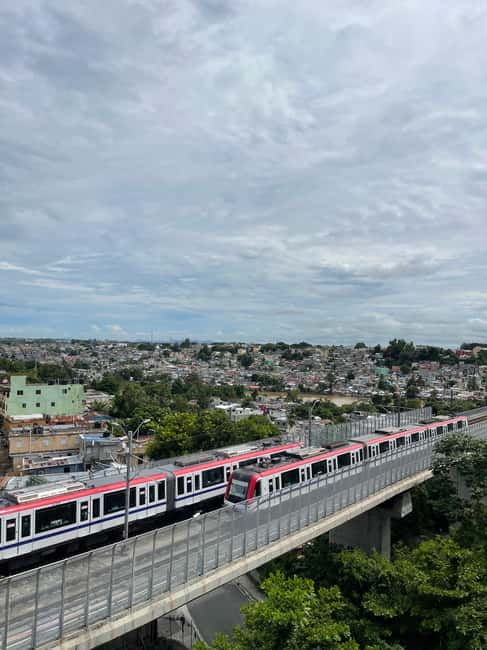
- The metro completes the local experience: You return by train after seeing how public transport connects different parts of the city.
- Solo visitors can book: Reservations are accepted for one person or more, and guides have taken special care of solo guests returning to their hotels.
Why this tour adds something different to Santo Domingo
If you spend all your time in the Colonial Zone, you can leave Santo Domingo with a neat but narrow picture of the city. This tour shifts the focus to streets, homes, shops, markets, food stands, and transportation used in everyday life.
I like that the experience does not treat the neighborhood as a backdrop. The guides come from the community and introduce you to people they know. That changes the tone. You are not simply passing through with a camera. You have a chance to greet residents, ask questions, and hear explanations about local customs and daily routines.
The four-hour format gives you enough time for several kinds of experience without turning the day into a long march. You walk, stop for food, use an air-conditioned vehicle during some portions, and ride both the cable car and metro. The walking is described as moderate rather than intense, which matters in Santo Domingo’s heat.
Still, you should come with the right attitude. This is not a museum visit with carefully arranged displays. Streets can be busy, homes are lived-in places, and the tour asks you to show courtesy when taking photos or meeting residents. Your guide helps set that tone.
A few more Santo Domingo days worth weighing up
- Santo Domingo: Los Tres Ojos, Boca Chica & More
★ 4.8 · 219 reviews - Colonial Zone: Historical Tour with a visit to the Columbus Lighthouse and Tres Ojos Park
★ 4.9 · 157 reviews - Santo Domingo: Colonial Zone Bike Tour
★ 5.0 · 127 reviews
Meeting at Eduardo Brito and getting your bearings
The tour starts at Estación del metro Eduardo Brito Gualey. The meeting coordinates are 18.5042498, -69.8842183, and guides wear gray Urbano Tours shirts with the company logo.
That clear meeting point is useful, but give yourself time to find the station. One solo guest got turned around and relied on local help before reaching the meeting point. The guide also stayed with that guest until an Uber arrived at the end, a reassuring touch if you are traveling alone.
You begin with the neighborhood sign, introductions, and Dominican coffee. This early stop is simple but useful. Coffee gives you a relaxed first conversation with the guide, while the sign helps you understand that this is a lived-in community with its own identity.
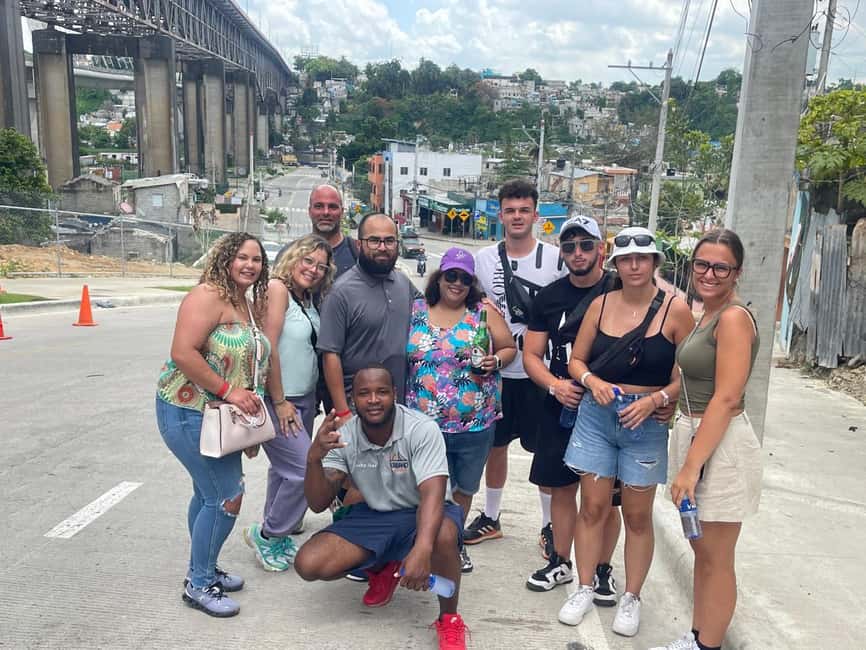
Guides have included Juan, Joel, Mike, and Maiky. The strongest part of their work is personal attention. They explain local life, answer questions, and keep the group together. English and Spanish are available, though you should select the language that works best for you when booking.
Walking the market, shops, and neighborhood streets
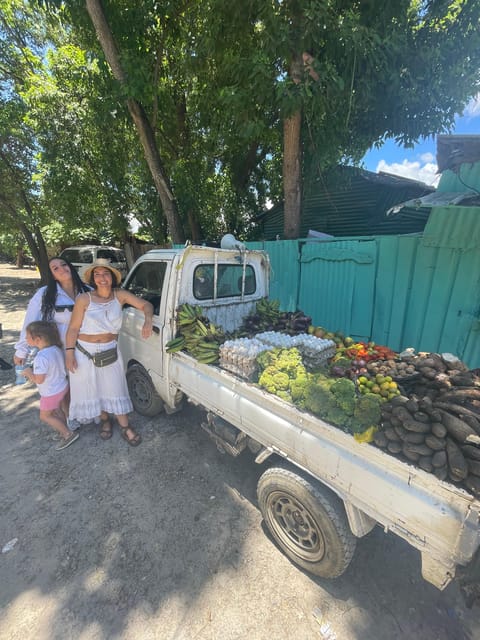
The walking portion takes you through local streets, a food market, and small shops. This is where you see the contrast with the Colonial Zone. Instead of grand historic buildings and formal plazas, you get the ordinary details that shape city life: people shopping, neighbors greeting one another, and local businesses serving nearby residents.
The market visit is not just a chance to look around. Your guide explains what people buy and how the market fits into the neighborhood. If you are curious about Dominican food, this is a good place to ask questions before tasting anything.
The pace allows time for interaction. You might speak with residents, watch daily commerce, and see how the guide is greeted by people along the way. That relationship is important. The tour works best because the guides are not introducing you to strangers from a distance. They are bringing you into a place they know.
You should bring comfortable shoes and clothes. The route is not described as strenuous, and one guest specifically found there was not too much walking in the heat. Still, the city is warm, sidewalks and streets can vary, and you will be outdoors for part of the four hours.
A typical Dominican home and fundita ice cream
One of the more unusual stops is a visit to a typical Dominican house. This gives you a glimpse of domestic life that a standard sightseeing route cannot provide.
The value here depends on the guide’s handling of the visit. A home is not a staged attraction, so respect and listening matter more than taking photographs. Ask before photographing people or interiors, and follow your guide’s lead.
Afterward, you try helado de fundita, Dominican ice cream served in a small plastic bag. One local maker, Amara, has been preparing and selling homemade ice cream from her home for more than 20 years. That kind of small detail gives the stop a human face. It is not simply dessert. It connects food, family work, and neighborhood enterprise.
The ice cream is also a welcome break from the heat. The tour includes it, along with water or soda, so you do not need to plan every refreshment yourself.
Same island, a completely different sort of day:
- Ron Barcelo Anejo Experience Factory Tour
★ 5.0 · 111 reviews - Saona Island, memorable all-inclusive experience, from Santo Domingo.
★ 4.5 · 100 reviews - Punta Cana: Santo Domingo Day Trip with Tickets and Lunch
★ 3.4 · 85 reviews - From Santo Domingo: Saona Island Day Trip w/ Lunch & Drinks
★ 3.9 · 83 reviews
Breakfast at a local stand, with a chimi option later
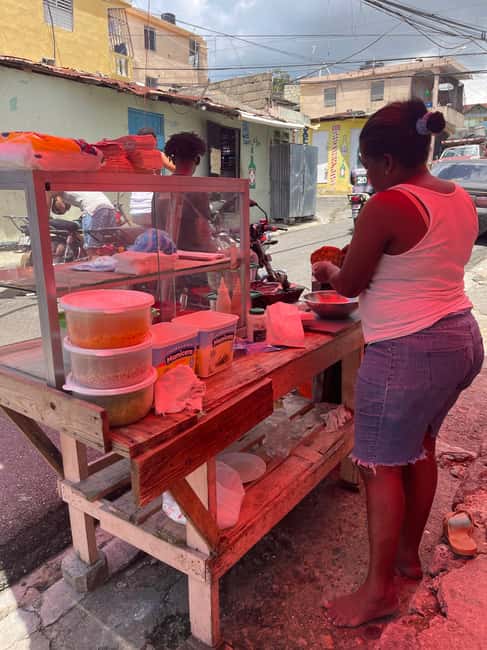
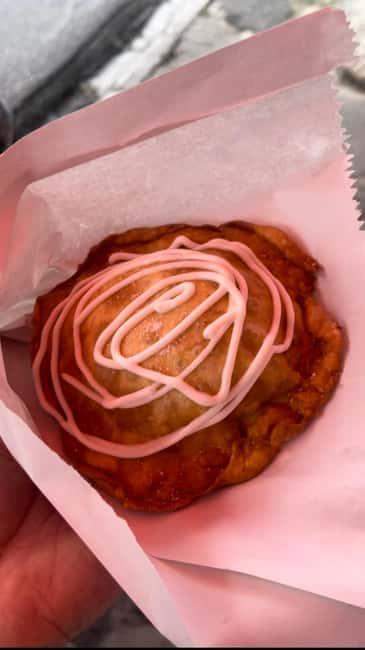
Food is one of the tour’s strongest features because it takes place where local residents actually eat. The morning tour includes Dominican empanadas, while the afternoon tour offers a chimi, the Dominican-style burger.
The empanadas make sense as a breakfast stop, especially with coffee. The chimi is a more substantial afternoon bite. Neither should be confused with a formal restaurant meal. You are eating at a local stand, which is precisely the point, but the setting may be basic.
The tour also includes typical Dominican ice cream and may introduce you to other snacks along the way. Past guests have singled out quipes and chocolate as memorable tastes. The exact food sequence depends on the time of day and what is available during the route, so do not book this expecting a fixed restaurant menu.
At $55 per person, the included food helps the value. You are paying for the guide’s time, several tastings, local transportation, and access to a neighborhood experience that would be difficult to arrange comfortably on your own. It is not the cheapest way to ride the metro or cable car, but the food and explanation make it more than a transit ticket.
Seeing Santo Domingo from the cable car
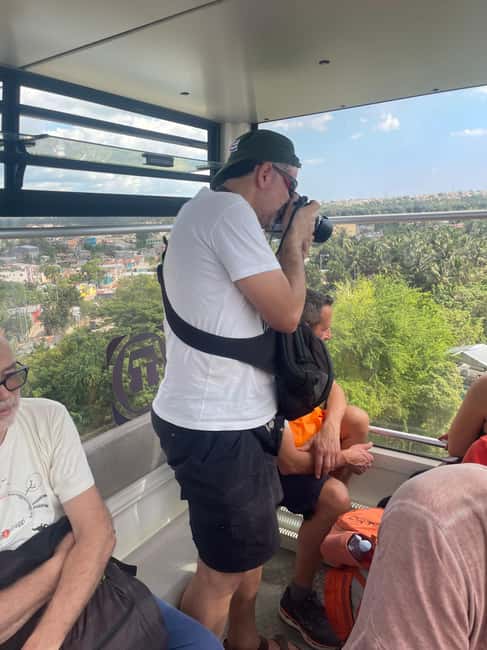
The Santo Domingo cable car is the visual high point. From above, you see colorful neighborhoods stretching from the National District toward northern Santo Domingo. The view gives you a sense of the city’s size and layout that is hard to grasp from street level.
Your guide uses the ride to explain the area’s past and present. That context matters. Without it, the cable car could be just a pleasant photo opportunity. With it, the buildings, streets, and changing neighborhoods become part of a larger story about how Santo Domingo functions.
The ride lasts about 45 minutes as part of the final transport section, though the exact timing of each segment can vary. Bring your camera, but remember that the best value is not only the view. Look down at the routes, homes, and public spaces you have just visited. The cable car lets you connect the ground-level walk with the wider city.
This stop may be especially rewarding if you have already spent time in the Colonial Zone. You get a different visual language: broad urban views rather than preserved monuments.
Returning by Santo Domingo metro

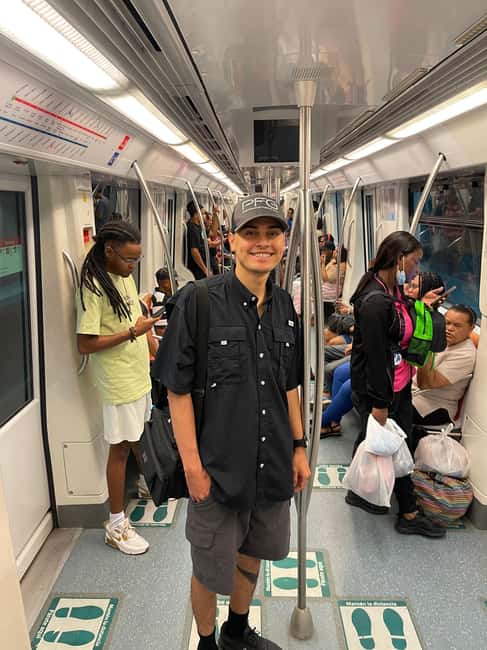
After the cable car, you ride the Santo Domingo train before returning to the entrance of the station. The metro fare is included.
This final ride ties the experience together. You have walked through a neighborhood, eaten local food, and then used two forms of public transport. The result is a practical sense of how the city connects, not just a collection of sightseeing stops.
The metro ride also makes the tour feel grounded in daily life. You are not being driven from one photo stop to another. You are moving through the city in ways many residents do. If you enjoy understanding how a place works, this is one of the tour’s most useful elements.
The itinerary lists roughly two hours for the neighborhood portion, 15 minutes for a photo stop and about 45 minutes for the cable car and train section. The full activity lasts four hours, leaving time for walking, food, introductions, and transfers.
Safety, comfort, and the limits of the experience
Safety is a central concern for many visitors considering a neighborhood tour. The guides clearly take responsibility for the group, and solo guests have described being accompanied until they reached a safe onward ride. The route also benefits from local guides who know the streets and the people.
That does not mean you should switch off your usual city awareness. Keep your belongings secure, follow the guide’s instructions, and ask before photographing residents. A neighborhood tour works best when you act as a respectful guest rather than treating the area like a display.
The tour is not suitable for wheelchair users. Comfortable shoes are required, and you should expect outdoor walking in warm weather. An air-conditioned vehicle is used during some parts, but this is not a fully vehicle-based tour.
The experience can suit families, and one family joined with a five-year-old child. Still, young children need to manage walking, food stops, public transport, and the pace of a four-hour activity.
How the $55 price compares with the experience
The price is $55 per person. That includes the live guide, Dominican coffee, typical ice cream, a chimi or empanadas depending on the tour time, water or soda, cable car fare, metro fare, and air-conditioned transport during some portions.
I consider that fair value if you want an organized introduction to local life. The cable car and metro fares alone would not justify the cost, but the price also covers the guide’s local connections, interpretation, food stops, and the effort of arranging a route that combines several neighborhoods and transport systems.
The value is lower if you only want panoramic views or a quick food tasting. You can find simpler sightseeing options for those needs. This tour earns its price through the human element: conversation, access to a typical home, a market visit, and explanations of the community.
Free cancellation is available up to 24 hours before the activity, and you can reserve now and pay later. That gives you some flexibility when arranging a Santo Domingo schedule.
Who will enjoy this four-hour experience most
I would choose this tour if you want to see Santo Domingo beyond the Colonial Zone and prefer real daily settings to formal attractions. It is a good fit for:
- Solo visitors who want a local guide and help with transport
- First-time visitors who want cultural context before exploring on their own
- Food-curious people who enjoy small stands and local snacks
- Families comfortable with walking and public transport
- Visitors who want cable car views without booking a separate city tour
- Anyone interested in how neighborhoods connect to the wider city
I would think twice if you want a private luxury outing, a formal history lecture, or a completely predictable schedule. The route includes lived-in streets and ordinary businesses, not a polished attraction. That is its strength, but it also means the experience depends on the guide, the pace of the group, and the day’s local activity.
The tour has a 4.8 rating from 68 reviews, and 89 percent of transport ratings are perfect. The most consistent praise goes to the guides’ warmth, organization, cultural explanation, and care for solo guests. That is the part I would value most when making the choice.
Should you book the neighborhood tour?
Book it if you want the city explained from the inside, with food, public transport, local conversation, and broad views in one half-day. The short distance from the tourist center makes it easy to add to a Colonial Zone visit.
I especially recommend it to solo visitors and curious first-time guests. Guides such as Juan, Joel, Mike, and Maiky have shown a strong ability to make people feel welcomed while explaining sensitive parts of local life in a clear way.
Skip it if your idea of sightseeing means only monuments, air-conditioned interiors, and a fixed restaurant lunch. For everyone else, this is a useful way to see Santo Domingo as a working city rather than only as a historic district.
FAQ
Where does the Santo Domingo neighborhood tour start?
The meeting point is Estación del metro Eduardo Brito Gualey. The listed coordinates are 18.5042498, -69.8842183. Guides wait at the station wearing gray shirts with the Urbano Tours logo.
How long does the tour last?
The activity lasts four hours. The route includes walking, food stops, neighborhood visits, cable car travel, and a Santo Domingo metro ride.
What food and drinks are included?
You receive Dominican coffee, typical Dominican ice cream, and water or soda. The food is either Dominican empanadas on the morning tour or a chimi, a Dominican burger, on the afternoon tour.
Does the tour include the cable car and metro fares?
Yes. The cable car fare and metro fare are included in the price.
Is the tour available in English?
Yes. Live guides are available in English and Spanish.
Can one person book the tour?
Yes. Bookings can be made for one person or more.
Is the tour suitable for wheelchair users?
No. The activity is not suitable for wheelchair users. Comfortable shoes and comfortable clothing are recommended.
Newest Santo Domingo trips we have written up
- Santo Domingo: Tres Ojos, Faro a Colón & Mamajuana Tour★ 5.0 · 3 reviews
- Santo Domingo: Small Group Tour with Cable Car from Bayahibe★ 3.9 · 5 reviews
- Santo Domingo Tour with caves from Punta Cana★ 4.0 · 5 reviews
- Punta Cana: Saona Island VIP | Private Beach, Open Bar & Lunch★ 3.4 · 6 reviews
- Santo Domingo: Saona Island Cataraman Food And Drink★ 4.7 · 4 reviews
- Santo Domingo: Paradisiac Waterfall & Lunch Cooked Over Wood★ 5.0 · 3 reviews
- Santo Domingo: Private City Tour walking★ 4.1 · 3 reviews
- Santo Domingo: Guided City Tour with Lunch★ 4.9 · 3 reviews
Santo Domingo Tours, compared.
Colonial Zone: Historical Tour with a visit to the Columbus Lighthouse and Tres Ojos Park
Read our review →


Saona Island, memorable all-inclusive experience, from Santo Domingo.
Read our review →


Browse the lists this tour appears in